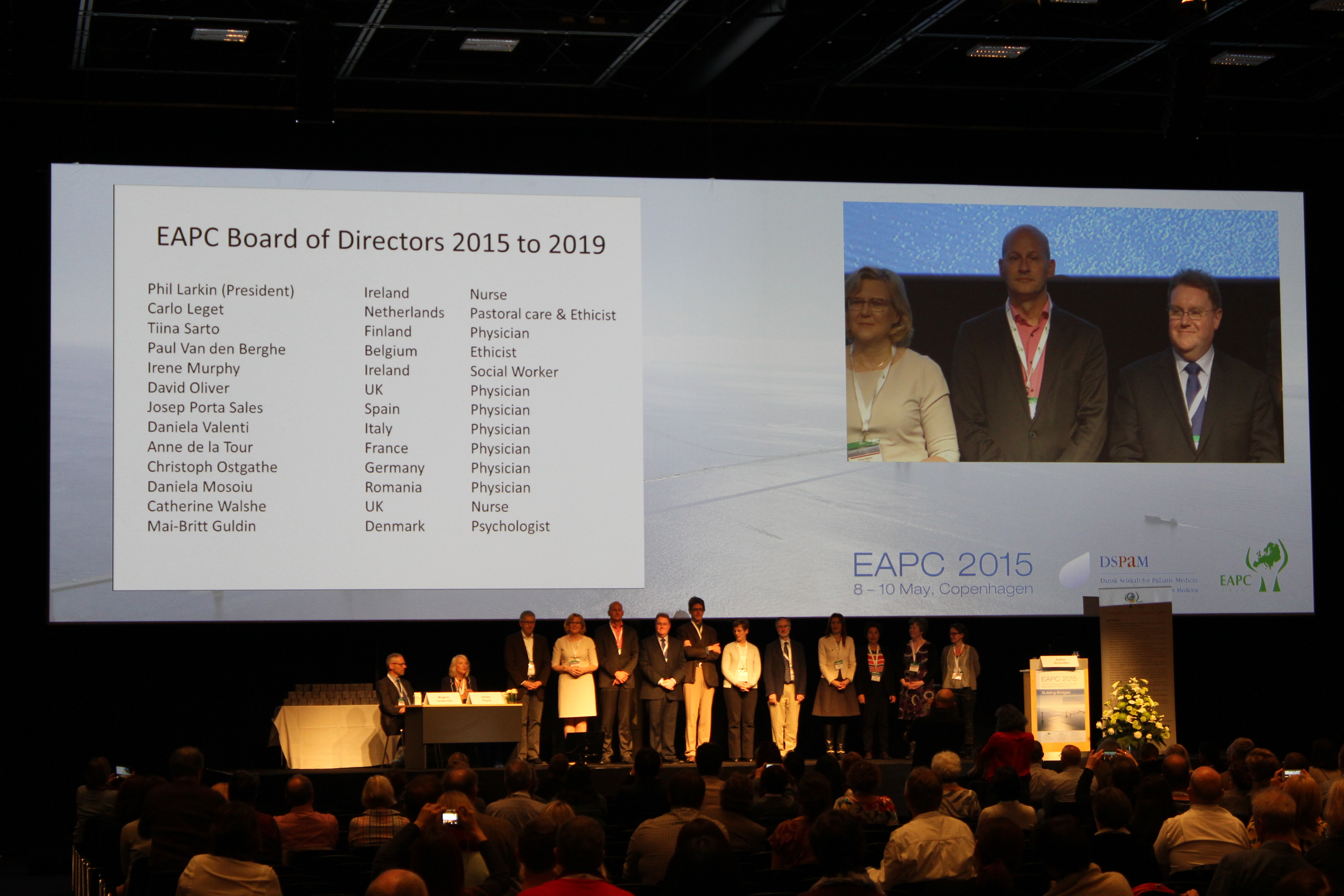
 Prof. Daniela Mosoiu, responsible for the EUPCA modules Advocacy and Personal Development, is now a member of the EAPC board of directors.
Follow @EUPCAleadership
Meeting with members of our advisory board in Copenhagen
 We met the members of our advisory board Prof. Frank Ferris, Prof. Sheila Payne and Prof. Philip Larkin (from left to right) at our stand during the EAPC Congress in Copenhagen. Our sincere thanks also to Prof Mary Callaway for all their great assistance to successfully realise this course.
Leadership starts here. And with us.
Posted on May 8, 2015 by pallcare at EAPC blog https://eapcnet.wordpress.com/2015/05/08/leadership-starts-here-and-with-us/

Professor Sheila Payne speaking at the graduation ceremony
The Steering Committee celebrate the graduation of the first students of the European Palliative Care Academy and invite you to meet the team at the 14th EAPC World Congress in Copenhagen this week. Louise Baker and Gerrit Frerich
“The EAPC needs you. Stand up. Get involved!” This was the key message that Professor Sheila Payne, President of the European Association for Palliative Care and a member of the EUPCA Advisory Board, gave the 20 new graduates of the European Palliative Care Academy (EUPCA) on Saturday night in Brasov.
In the presence of distinguished guests and members of the Advisory Board, including Mary Callaway from the International Association for Hospice and Palliative Care (IAHPC) and Dr Frank D Ferris, executive director of palliative medicine, research and education for the OhioHealth system, the EUPCA team proudly celebrated the achievements and successes of their first 20 students in the home town of Hospice Casa Sperantei, Romania’s Centre of Excellence for Palliative Care. The 20 graduates, from 14 European countries with seven different professional backgrounds, received their certificates of achievement for completing the first-ever Academy course from members of the steering committee.
The European Palliative Care Academy is a joint project of the Robert Bosch Stiftung and the University Hospital Cologne, Germany; the Nicolaus Copernicus University Torun, Poland; King’s College London, UK, and Hospice Casa Sperantei, Brasov, Romania, in collaboration with the EAPC. The course is made up of six modules –Project Management, Personal Development, Team Work, Research and Advocacy – and includes a personal project, as well as an observation week at a European Institution of the participant’s choice. The modules are taught in four face-to-face teaching weeks, one at each of the partner institutions. As the final module, Advocacy, was taught in Brasov, it seemed only right that this should be the location for the graduation ceremony.
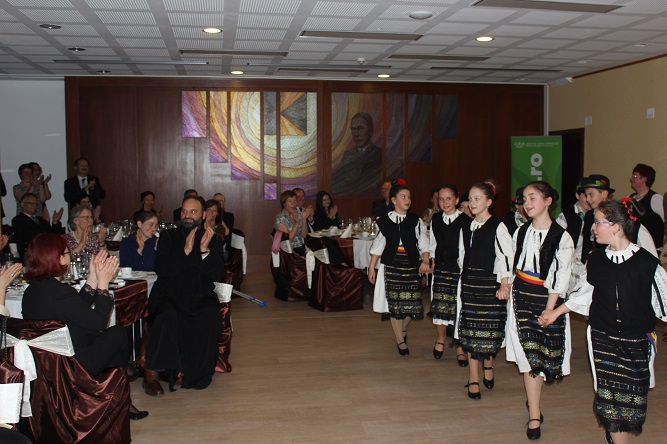
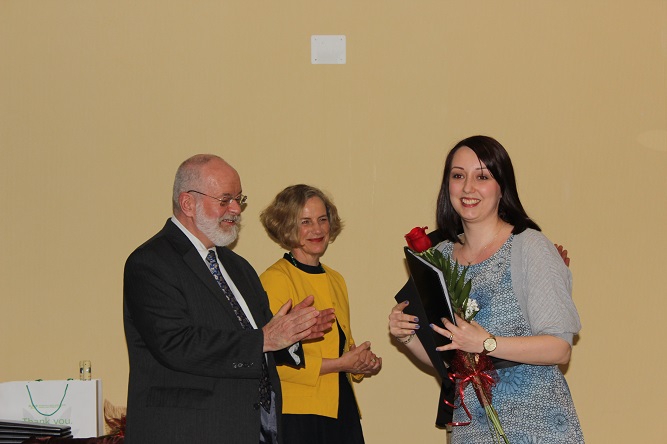


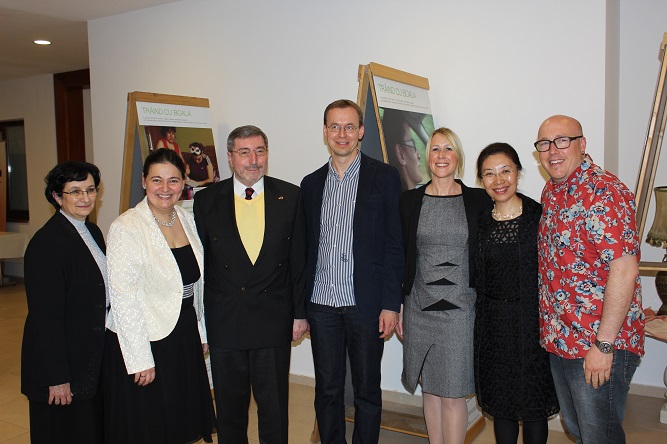

“Not only have we been able to highlight the achievements of all our graduates this evening, but we have actively demonstrated that palliative care can really benefit from an international network,” remarked Assistant Professor Dr Daniela Mosoiu, Education and National Development Director at Hospice Casa Sperantei and a member of the EUPCA Steering Committee.
With the new intake of students in September 2015, EUPCA aims to expand and build upon that network. EUPCA will be represented at this week’s EAPC World Congress in Copenhagen with a stand and poster. In the ‘Meet the Experts’ session on Saturday 9 May (08.00 in meeting room 20) participants will also have the chance to meet some of the members of the EUPCA steering committee and teaching staff personally.

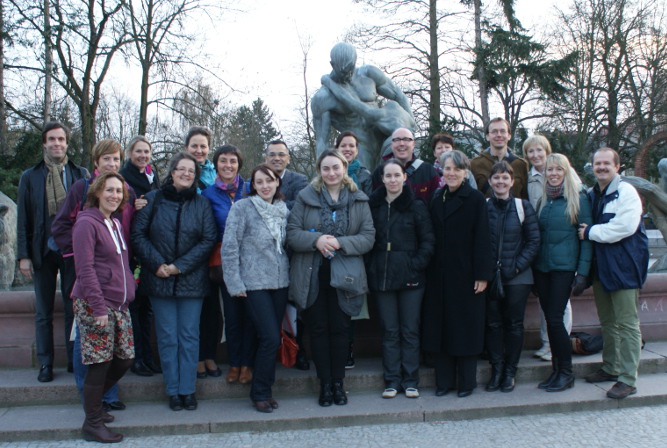
Graduate students from the European Palliative Care Academy, teaching faculty and guests
Now, the 20 graduates will be returning to their respective countries to continue advancing palliative care throughout Europe by applying what they have learnt throughout the course. The personal projects also ensure that the course is already having a direct impact on palliative care in at least 14 European countries. And the projects are just as varied as the students. From setting up an out-of-hours telephone service in Athens to developing a strategic bereavement plan for a Dublin hospice, or initiating an Advisory Group for Pediatric Hospices in Central Europe, the projects certainly demonstrate that the graduates really are on the way to becoming the palliative care leaders of tomorrow.
As Niamh Finucane, a social worker from Dublin, Ireland and EUPCA graduate, stated during the ceremony, “Leadership starts here. And with us,” proving that Sheila Payne’s message has already been received loud and clear.
Find out more…
- Click here for more information on the next course. Deadline for applications: 31 May 2015.
- Join us at the European Palliative Care Academy stand at the congress.
- Come along to our ‘Meet the Experts’ session on Saturday 9 May (08.00, meeting room 20).
EUPCA week 2 – Exploring the Unique World of Palliative Care in Poland
The second week of the postgraduate program for emerging leaders in palliative care was conducted in Poland by the Nicolaus Copernicus University of Torun and invited lecturers from other Polish institutions as well as from Germany and Switzerland.
For many of the 20 participating palliative care experts it was their first time in Poland. The course week took place at the Popieluszko Hospice in Bydgoszcz and the Dutkiewicz Hospice in Gdańsk, giving the participants the chance to get to know different hospices and cities in the country.
Poland is one of the “stations” of the European Palliative Care Academy because of its unique history and special development in palliative care. The first hospice in Eastern Europe was established in Krakow in 1983, making Poland a very interesting place in the development of palliative care in Eastern Europe. Due to political change in the early 1980’s it was possible for palliative care to be developed more quickly than in other eastern European countries which did not experience political change until the late 1980’s/ early 1990’s. Additionally, the important role that volunteers play in palliative care in Poland stems from its history. Besides having university student and pupil volunteers for a few years now, the hospice in Gdansk was the first one to include prisoners in hospice work.
The main topic of the week was teamwork in palliative care and included aspects of how to work in a team and deal with the problems that arise. Ethical dilemmas, new dimensions of palliative care and various occupational roles in palliative care were elaborated on during workshops and discussions. The participants also received their next sessions on Project Management, an ongoing module for continuous development where participants are supported and coached in their work on their personal projects. When asked about the week Reverend Dr. Piotr Krakowiak said, “We were very pleased to have the participants with us in Poland and it was a very enjoyable week for all professionals and volunteers involved in EUPCA.”
The session on volunteering in hospice-palliative care was illustrated with testimonies from a few active volunteers, and informal meetings with them during coffee breaks. Preparation for the “Fields of Hope” charity event, involving more than 3000 school volunteers and teachers created a unique background, which illustrated the philosophy of social education on end-of-life care in the local community. Furthermore, with a tour through the hospices the participants were able to get to know local best practices. At the Dutkiewicz Hospice in Gdańsk the participants were introduced to the various methods of palliative care for adults, children and the perinatal hospice. Additionally the participants had a chance to see how Hospice Foundation works.
After the long working days, the participants were able to explore the cities, facilitated by guided tours and dinner with local specialties and drinks. Dinner of fish from the Baltic Sea wrapped up the week in Gdansk, which was a real lesson on the joys and difficulties of teamwork in palliative care.
Authors: Reverend Dr Piotr Krakowiak, Dr Malgorzata Krajnik, Dr Anna Pyszora


Leading the way in European palliative care: A student’s view
Niamh Finucane, Senior Social Worker, St Francis Hospice, Dublin, Ireland, is among the first cohort of students on an innovative palliative care leadership course. She explains what the course means to her.
I was delighted when I was accepted on to the Leadership Course being offered by the European Palliative Care Academy (EUPCA) and supported by the Robert Bosch Foundation. The programme looked exciting, being offered across four academic centres in Europe over 18 months. The Irish Hospice Foundation supported my attendance on the course by providing a travel grant.
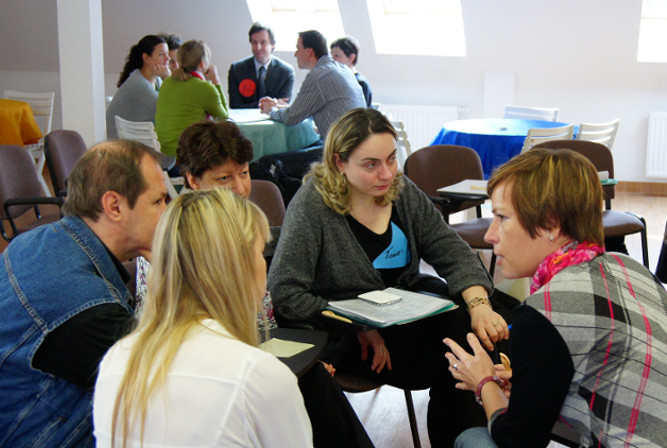
The first week took place in Cologne in Germany in September 2013, where I met the 19 other participants from 13 other countries in Europe. Everybody had a wealth of experience in palliative care. The enthusiasm of the group was really energising as each person spoke of their vision for palliative care developments in their agency or country. During the week, we received training and tutorials on Project Management and Personal Development. We visited the Centre for Palliative Care at the University Hospital of Cologne and also Rondorf Hospice. It was great to be able to get the opportunity to experience how palliative care services are set up in Germany and visit sites of best practice.

Niamh Finucane, Senior Social Worker, St Francis Hospice, Dublin, Ireland
Each participant had to identify a project we would lead to bring about a change of practice in our agency or country that we would pursue over the duration of the course. By the end of the week in Cologne, I went home with lots of ideas buzzing in my head and excited about the possibilities for my project. Using the skills learnt and talking to colleagues, I clarified the focus of my project. I will review the bereavement services in St Francis Hospice, Dublin where I work and develop a strategic development plan for the future bereavement services offered by the hospice. This is particularly exciting as our services are expanding with the opening of an inpatient unit on a second site at the end of 2014. As part of the course I have the opportunity to go to another institution for a week of observation. As a clinician, it is great to have the possibility of seeing how other services have developed over time and the different ranges of services they offer.
There is great shared learning on the course, with plenty of opportunities to interact with the other participants. Palliative care is at a different stage of development in each of our countries. Some participants are setting up new hospice services as palliative care is still a developing specialty in their country. Other participants are focusing on service improvements or gaps in knowledge. I am really looking forward to our next week together in Bydgoszcz in Poland at the end of March 2014.
Above and beyond the daily rain: My observation week at the Marie Curie Cancer Centre in the West Midlands (UK)
Boris Knopf, participant of the EUPCA Leadership Course 2013-2015 and member of the PalliativTeam Frankfurt gGmbH writes about his observation week in the UK:
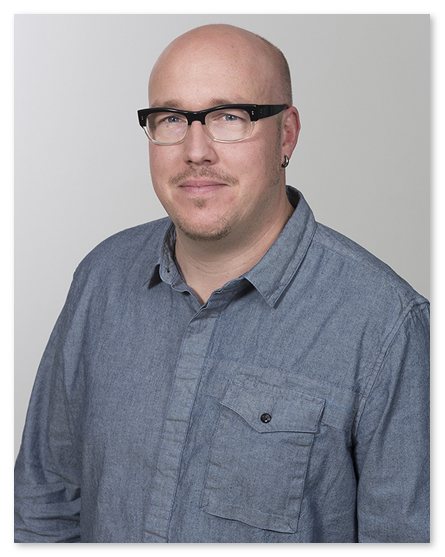
Boris Knopf
I had the chance to do my observation week at the recently built Marie Curie Cancer Centre in Solihull near Birmingham/ West Midlands in the United Kingdom. There were various reasons for carrying out the observation week there. I was interested in learning more about the English healthcare system, especially with regard to the structure of palliative care in the UK. I also wanted to gather information for the personal project that I am conducting as part of the EUPCA Leadership Course. My project is concerned with the implementation of advance care planning in German nursing homes. Furthermore, I wanted to get insight into the in-hospice and outpatient services implemented by Marie Curie Cancer Centre and the Macmillan nurses.
So I travelled to Birmingham for what transpired to be a very rainy week in January 2014. I received wonderful support from the local consultant of palliative care at the Marie Curie Cancer Centre and from the whole staff and the week was organised very well. I observed the work and daily activities at the Centre, spent one day at the in-hospice and talked with the local social workers. On another day I attended different multidisciplinary team rounds both for the out-patient services and the hospital patients. On a further two days I shadowed Macmillan nurses in the area of Solihull and Marie Curie Cancer Centre nurses in the wider area of Birmingham.
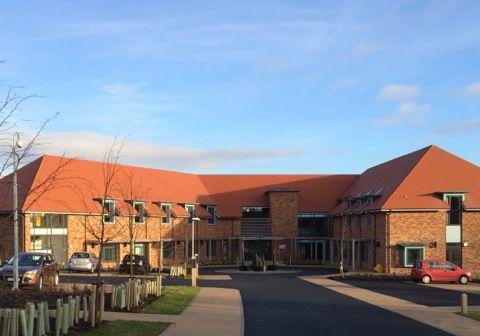
Marie Curie Cancer Centre
The hospice structure is very interesting; it is quite similar to that of the German palliative care wards. The structure of palliative care in the English healthcare system is driven by the motivation, not to let a patient slip through the system. Every patient is treated by their general physician; he/ she takes control of the whole process, gets support from local carers, district nurses and social workers. If the patient requires more help, they take a look at the package of care and organise the help which is needed. This structure makes it possible to have palliative care as a working system of early integration, something very motivating for me because it is not known in Germany in this way. After visiting several nursing homes, I also got the chance to learn more about advance care planning in the UK by talking to several general physicians. Overall, the Marie Curie Cancer Centre is the central place for all activities in palliative care in the Solihull area. They have a 24 bed
hospice, a day-hospice with 10 spaces, the out-patient service (by Macmillan and Marie Curie nurses), and a well organised volunteer service among other facilities. I am very impressed with the whole structure of palliative care in the English healthcare system and the naturalness of handling early integration in palliative care.
Over the course of the week I learnt a lot about advance care planning, especially in nursing homes. With this newly acquired knowledge, I now have the chance to develop my project successfully over the next months while being part of the EUPCA Leadership Course. Besides this, I met many very interesting people who, like myself, are highly motivated to work in the field of palliative care. This is the aspect which makes the EUPCA and this observation week so important. Meeting people from different European countries and from various professions and speaking the same language of palliative care allows us to share experiences and gain knowledge and competencies. This provides us with the strength and resources to develop palliative care in our own structures.
I want to thank the Robert Bosch Stiftung for giving me that chance.
Author: Boris Knopf, member of the PalliativTeam Frankfurt gGmbH
Leading the way in European palliative care
The first Leadership Course of the European Palliative Care Academy got off to a flying start in Cologne in September.
Twenty participants joined us at the Centre for Palliative Care at the University Hospital in Cologne from 23-27 September 2013 for the first week of this new and exciting course delivered by the European Palliative Care Academy (EUPCA). They came from all across Europe including: Albania, Belgium, Georgia, Germany, Greece, Hungary, Iceland, the Netherlands, Poland, Republic of Ireland, Romania, Slovenia, Switzerland and the United Kingdom. The participants bring a great deal of experience in palliative care to the table, ranging from years of experience as a nurse or doctor in a hospice to being advocates for palliative care in their respective countries.
Albert Leka, for example, comes from Albania where palliative care is still a very young discipline. One of his personal learning objectives for the European Palliative Care Academy is the improvement of his advocacy skills in order to more effectively influence policies for adequate availability of pain-relieving medication in his country.
The EUPCA is a unique further education course that prepares palliative care professionals from the whole of Europe for prospective leadership tasks in their professional lives. The contents of the course include sessions on Personal Development, Project Management, Team Work, Research Methods and Advocacy.
In Cologne the participants received training and tutorials on Project Management and Personal Development. Moreover, they had a chance to experience palliative and hospice care in Germany with the example of the Centre for Palliative Care at the University Hospital of Cologne and Rondorf Hospice.
“We are very pleased with the absolutely positive and exciting evaluation of this kick-off week by the participants” said Professor Raymond Voltz, Director of the Centre of Palliative Care at the University Hospital of Cologne. The feedback received so far was very positive and encouraging with participants commenting primarily on the organisation of the week and the inspiring new colleagues that they had the opportunity to meet: “Really wonderful, both academically but also in creating new networks or meeting interesting and inspiring colleagues”.
The second course week will be held in March in Bydgoszcz, Poland, we hope to bring you more news from course participants.
Authors: Gerrit Frerich and Heather Graham, EUPCA Coordinating Office